Constantine, Algeria | October 27-29, 2026
It is with great pleasure that we welcome you to the 6th edition of the IEEE International Conference on Electrical Sciences and Technologies in the Maghreb (CISTEM 2026), to be held from October 26 to 29, 2026, at the prestigious Frères Mentouri University Constantine 1, Algeria.
Building on the remarkable success of its previous editions in Tunis, Marrakech, and Algiers, CISTEM has firmly established itself as a biennial flagship event for electrical engineering specialists across the Maghreb. Organized by the Faculty of Science and Technology at Constantine 1 University – Frères Mentouri, in close collaboration with a consortium of leading research laboratories and centers, and under the auspices of the Algerian Association of Electrical and Electronic Engineering (AAGEE), the conference provides a premier platform for scientific and technological exchange at both regional and international levels.
The 2026 edition aims to strengthen inter-Maghreb cooperation while broadening research networks toward Europe and beyond. A particular focus will be placed on addressing the pressing socio-economic challenges of the energy and technological transitions—critical issues for the future of the region.
Inspired by the spirit of leading international conferences, CISTEM 2026 will highlight transformative technologies shaping tomorrow's world—from sustainable energy systems to cutting-edge innovations in electronics, automation, and industrial computing. Our goal is to create a dynamic and stimulating environment that promotes constructive dialogue, collaborative research, and knowledge sharing among scholars, engineers, and industry professionals.
We look forward to welcoming you to Constantine for what promises to be an inspiring and impactful event.
July 1, 2026
July 10, 2026
July 20, 2026
The organizing committee of CISTEM 2026 invites original and high-quality contributions addressing recent advances and emerging challenges in the field of electrical sciences and technologies. Submissions are encouraged in, but not limited to, the following tracks:
For full details (submission guidelines, important dates, templates), please download the complete Call for Papers:
Download the CFP (PDF)
Rector of Constantine1 University
Dean of the Faculty of Sciences and Technology
Pr. Abdelmalek KHEZZAR
Pr. Mohamed BOUDOUR
Pr. Slimane BOUAZABIA
Pr. Lotfi BAGHLI
Dr. Amina CHENTIR
Dr. Khalil NABTI
Pr. Fateh KRIM
Pr. Mouloud CHALLAL
Pr. Fatma Zohra CHELLALI
Pr. Abdelber BENDAOUD
Dr. Salah REZGUII
Pr. Laid ZAROUR
Pr. Rabia MEHASNI
Dr. Abdelfettah BOUSSAID
Dr. Abderaouf BOULOUDENINE
Dr. Lamri LOUZE
Pr. Ahmed Lokmane NEMMOUR
Pr. Amar TILMATINE
Pr. Hacene BOUZEKRI
Dr. Mehdi OUILI
Dr. Mohamed Amine MOUSSA
Ait Ahmed Nadia (Fr)
Ait Ziane Meziane (Fr)
Amara Yacine (Fr)
Amirat Yassine (Fr)
Aouichak Ismail (Fr)
Arici Muslum (Tr)
Bacha Seddik (Fr)
Baghli Lotfi (Fr)
Bahri Imen (Fr)
Bel Hadj Youssef Nesrine (Tn)
Belghith Safya (Tn)
Belhaj Jamel (Tn)
Belhaouane Mohamed Moez (Fr)
Ben Abdelghani Bennani Afef (Tn)
Ben Ahmed Hamid (Fr)
Ben Attia - Sethom Houda (Tn)
Ben Rhouma Amine (Tn)
Ben Said Romdhane Marwa (Tn)
Benbouzid Mohamed (Fr)
Bensetti Mohamed (Fr)
Besbes Mongi (Tn)
Bouani Faouzi (Tn)
Bouarroudj Mounira (Fr)
Bouchekara Houssem Rafik (Sa)
Bourogaoui Manef (Tn)
Boussak Mohamed (Fr)
Camara Mamadou-Baïlo (Fr)
Canale Laurent (Fr)
Cardenas Alben (Ca)
Cardoso Antonio J. Marques (Pt)
Chafai Djamel Eddine (Jp)
Cherif Habib (Tn)
Chouder Aissa (Fr)
Dakhli Saber (Fr)
Denidni Tayeb A. (Ca)
Dey Subham (Fr)
Dhahbi-Megriche Nabila (Tn)
Djemai Mohamed (Fr)
El Habib Daho Mostafa (Fr)
Fadel Maurice (Fr)
François Bruno (Fr)
Gabsi Mohamed (Fr)
Gharbi Rached (Tn)
Ghodbane Fethi (Tn)
Guilbert Damien (Fr)
Harid Noureddine (Ae)
Hlali Hiba (Tn)
Hlioui Sami (Fr)
Id-Khajine Lahoucine (Fr)
Jebali Ben Ghorbal Manel (Tn)
Jelassi Khaled (Tn)
Kadi Moncef (Fr)
Kanaan Hadi (Lb)
Kardous Zohra (Tn)
Kazar Okba (Ae)
Kermadi Mostefa (Uk)
Kherif Omar (Uk)
Lethiecq Marc (Fr)
Maalej Samah (Tn)
Machmoum Mohamed (Fr)
Mdini Nidhal (Tn)
Mekhilef Saad (My)
Mezani Smail (Fr)
Mostefa Kermadi (Uk)
Mrabet-Bellaaj Najiba (Tn)
Naouar Mohamed Wissem (Tn)
Olabi Abdul Ghani (Ae)
Olivier Jean-Christophe (Fr)
Sadli Idriss (Fr)
Saim Abdelhakim (Fr)
Sareni Bruno (Fr)
Sbita Lassaad (Tn)
Skander Sondes (Tn)
Slama-Belkhodja Ilhem (Tn)
Taghouti Hichem (Tn)
Takorabet Noureddine (Fr)
Tounzi Abdelmounaïm (Fr)
Venet Pascal (Fr)
Verma Arun (In)
Vido Lionel (Fr)
Yahiaoui Réda (Fr)
Zaghdoudi Mohamed Chaker (Tn)
Zeddini Besma (Fr)
Abadli Salah
Abidine M'hamed
Achaibou Nadia
Addou Djamal
Afghoul Hamza
Agab Salah Eddine
Ahmed Abdiche
Ahmed Seghir Zianou
Aissaoui Amel
Aissaoui Abdelgahani
Aissat Abdelkader
Ales Achour
Amiour Leila
Ammar Moussi
Amrani Fayçal
Aris Skander
Assia Kourgli
Assia Azizi
Ayad Mouloud
Ayad Abdelghani
Azrar Arab
Babaa Fatima
Bagtache Radia
Bakelli Yahia
Barkat Said
Bazi Cherbi Lynda
Bechekir Seyf Eddine
Bedoud Khouloud
Bekhti Ahmed
Belattar Mounir
Beldjilali Abdeslem
Bellel Azzeddine
Belmili Hocine
Benabid Rabah
Benachour Ali
Benallal Ahmed
Benammar Abdessalem
Benazza Baghdadi
Benblidia Nadjia
Bendaoud Abdelber
Bendimerad Salah-Eddine
Benecibe Nedjoua
Benierbeh Said
Benkouider Fatiha
Benlaloui Idriss
Benmenine Djamel
Benmimoun Youcef
Bensaid Samir
Benyahia Djalal
Berbaoui Brahim
Berbar Tarik
Berrezzek Farid
Bouazabia Slimane
Boubakeur Azoui
Bouchehida Wahid
Boucherit Mohamed Seghir
Boudour Mohamed
Boufenneche Lotfi
BOUIBED Mohamed Lamine
Boukabou Abdlekrim
Boukebbous Seif
Boukezzi Larbi
Boukhetala Djamel
Boukhobza Taha
Boukra Tahar
Bouloudenine Abderraouf
Boumediene Abdelmadjid
Boussaid Abdelfettah
Boutelhig Azzedine
Boutemedjet Ayoub
Bouzekri Hacene
Bouzouad Mouloud
Chaguetmi Samiha
Challal Mouloud
Chehlatt Sihem
Chellali Fatma Zohra
Chentir Amina
Cherfa Yazid
Cheriet Ahmed
Chiheb Sofiane
Chikr Elmezouar Miloud
Choubani Fethi
Dehmas Mokrane
Dekali Zouheyr
Derkaoui Mokhtaria
Dib Samira
Dib Lyes
Djehaf Mohammed Abdeldjalil
Drai Redouane
Drid Said
Driss Raouti
Farrouki Atef
Ferroukhi Merzak
Fertas Fouad
Fertas Khelil
Fortaki Tarek
Gairaa Kacem
Ghedamsi Kaci
Gherbi Fatima Zohra
Grine Farouk
Guezouli Lyamine
Guichi Fella
Guichi Amar
Hacil Meheiddine
Hacini Latifa
Haddad Sofiane
Hadj Abdelkader Amine
Hadj-Dida Abdelkader
Hadjeri Samir
Hameurlaine Hicham
Hamidia Mahfoud
Hammadi Nacera
Hamouda Messaoud
Hamza Houassine
Hanafi Salah
Handouzi Wahida
Harrag Abdelghani
Hasni Mourad
Hassani Islam
Hemmouche Larbi
Ikhlef Ameur
Iratni Abdelhamid
Jeghloud Hindd
Kaabeche Abdelhamid
Kadi Moncef
Kandouci Chahinaz
Karim Yazid
Karoui Moussa Sofiane
Kasrani Souad
Kedir-Talha Malika
Kerdoun Djallel
Kerrour Foued
Kezai Mourad
Khebli Abdelmalek
Kheddam Radja
Kheira Mendaz
Khelfa Bettou
Khezzar Abdelmalek
Kouba Nour El Yakine
Kouzou Abdellah
Krim Fateh
Labed Djamel
Labiod Samir
Ladaci Samir
Ladjici Ahmed Amine
Lahmissi Ahmed
Laissaoui Mohammed
Lakdja Fatiha
Lakhdara Maya
Lamrous Omar
Laroussi Toufik
Latreche Mohamed El Hadi
Lichouri Mohamed
Louali Rabah
Louazene Hassiba
Louze Lamri
Mahgoun Hichem
Mazari Sarah
Mazouz Nezhate
Mehasni Rabia
Mehdi Merouane
Meliani Hamza
Mellit Adel
Menaa Mohamed
Merabet Boualem
Merabti Halim
Meraihi Yassine
Meskine Fatiha
Messai Abderaouf
Messlem Youcef
Miloud Chikr Elmezouar
Mimouni Abdenbi
Mohamed Soltane
Mohammed Amine Chikh
Mohellebi Hassane
Moudoud Mustapha
Moulai Hocine
Mouloud Kihel
Moussa Mohamed Amine
Nabti Khalil
Nadia Bakir
Nail Bachir
Naitseghir Amirouche
Nassour Kamel
Nemmour Hassiba
Nemmour Ahmed Lokmane
Ouahab Iman
Ouarzeddine Mounira
Ouazir Youcef
Ouili Mehdi
Ouled Ali Omar
Rahem Djamel
Reguieg F. Zohra
Rekioua Djamila
Rekioua Toufik
Rezgui Salah
Rouha Nacera
Saci Lynda
Safer Omar Adib
Sahli Salah
Said Nemmich
Saoud Bilal
Saoudi Kamel
Sandali Messaoud
Sayah Rafik
Sekhane Djalal
Slama Mohammed El Amine
Slimane Abdelhalim
Slimani Helima
Sobti Nadjah
Soufi Youcef
Souissi Boularbah
Taberkit Amine Mohammed
Thabet Rawdha
Tilmatine Amar
Tolbi Bilal
Yahiaoui Amina
Ykhlef Faycal
Ykhlef Farid
Zaoui Abdelhalim
Zarour Laid
Zebiri Chemseddine
Zelmat Samir
Zergat Kawthar Yasmine
Zerrouki Hadj
Ziari Zehira
In keeping with its tradition of excellence, CISTEM 2026 will offer authors the opportunity to publish their work in IEEE Xplore. Accepted papers will be submitted for inclusion in IEEE Xplore, subject to meeting IEEE Xplore's scope and quality requirements. Furthermore, a rigorous selection of outstanding contributions will be considered for publication in high-impact partner scientific journals, ensuring broad visibility and dissemination of the research findings presented at the conference.
The final version of accepted papers must be prepared according to the IEEE Xplore formatting procedure. Any accepted paper submitted without using this procedure will not be included in IEEE Xplore.
Templates for CISTEM 2026:
All final papers and copyright forms must be uploaded via the CMT submission system:
https://cmt3.research.microsoft.com/CISTEM2026
You must add one line in the footnote of the first page of your camera‑ready paper:
Exceptions:
⚠️ Important: Before signing the copyright, authors must ensure that all authors listed on the paper are correctly included in CMT3. No addition or removal of authors will be tolerated compared to the initial version submitted in CMT3.
To finalize your paper for publication in IEEE Xplore, the first author must complete the copyright transfer by following these steps:
Submissions must follow IEEE PDF eXpress requirements. The Conference ID for CISTEM 2026 is:
Before Creating a PDF – Proofread your source document thoroughly to confirm that it will require no revision.
Creating your PDF eXpress Account – Log in to the IEEE PDF eXpress™ site.
First‑time users should do the following:
Previous users of PDF eXpress need to follow the above steps, but should enter the same password that was used for previous conferences. Verify that your contact information is valid.
⚠️ Important: Keep the PDF name as given by the PDF eXpress website (usually a large number). Do not change the name – otherwise IEEE Xplore will not find it.
Submit the PDF on your CMT account, in the Camera Ready section, before the deadline (see Important Dates).
For any questions regarding the final submission, please contact the conference secretariat: cistem2026-contact@lec-umc.org
All program sessions. Paper IDs are listed in the Paper IDs column.
| Start | End | Session | Loc. | Type | Track | Paper IDs |
|---|---|---|---|---|---|---|
| Tuesday, 27 October 2026 | ||||||
| 07:30 | 16:00 | Registration | Lobby | Participant | --- | Participant registration |
| 09:00 | 09:30 | D1-Open | Conf. | Cer. | Plen. |
Opening Ceremony Welcome Addresses • Address by the Rector — Pr. Dehimat Laid (Rector of Constantine 1 University, Algeria) • Address by the Dean — Pr. Aris Skander (Dean of the Faculty of Technology, Constantine 1 University, Algeria) Followed by the official opening of CISTEM 2026. |
| 09:30 | 10:30 | D1-KN1 | Conf. | KN | Plen. |
Seddik Bacha Hydrogen as a Flexibility Enabler for Large-Scale Renewable Energy Integration |
| 10:30 | 11:00 | Coffee Break | --- | Break | --- | --- |
| 11:00 | 12:30 | D1A1 | R.1 | Oral | T1 | 62, 82, 90, 137 |
| 11:00 | 12:30 | D1A2 | R.2 | Oral | T2 | 128, 139, 207, 219, 235 |
| 11:00 | 12:30 | D1A3 | R.3 | Oral | T3 | 119, 171, 212, 221 |
| 11:00 | 12:30 | D1A4 | R.4 | Oral | T4 | 89, 113, 133, 158, 165 |
| 11:00 | 12:30 | D1A5 | R.5 | Oral | T5 | 105, 147, 168, 177, 239 |
| 12:30 | 14:00 | Lunch Break | --- | Break | --- | --- |
| 14:00 | 15:30 | D1-SS1 | Conf. | Oral | SS1 | 343, 154, 129, 370, 172 |
| 14:00 | 15:30 | D1B1 | R.1 | Oral | T1 | 152, 155, 178, 229 |
| 14:00 | 15:30 | D1B2 | R.2 | Oral | T2 | 269, 285, 310, 312, 359 |
| 14:00 | 15:30 | D1B3 | R.3 | Oral | T3 | 232, 362, 376, 379 |
| 14:00 | 15:30 | D1B4 | R.4 | Oral | T4 | 443, 510, 521, 562 |
| 14:00 | 15:30 | D1B5 | R.5 | Oral | T6 | 20, 53, 131, 141, 181 |
| 14:00 | 16:00 | D1-PoB | R.6 | Post. | T1 | 68, 93, 96, 123, 136, 143, 151, 156, 160, 166, 174, 191, 200, 257, 290, 512, 525, 127 |
| 15:30 | 16:00 | Coffee Break | --- | Break | --- | --- |
| 16:00 | 17:00 | D1-KN2 | Conf. | KN | Plen. |
Hamid BEN AHMED Electrical Engineering and the Environmental Challenge: Rethinking System Design |
| 17:00 | 18:00 | D1-TR | Conf. | RT | Plen. |
Round Table 1 Reinventing Higher Education for the Age of AI |
| Wednesday, 28 October 2026 | ||||||
| 07:30 | 16:00 | Registration | Lobby | Participant | --- | Participant registration |
| 08:30 | 09:30 | D2-KN3 | Conf. | KN | Plen. |
Sid Ali RANDI Electropitting in eMotors for EV: Ampere-Renault Approach |
| 09:30 | 10:30 | D2A1 | R.1 | Oral | T1 | 301, 304, 307, 309, 163 |
| 09:30 | 10:30 | D2A2 | R.2 | Oral | T2 | 360, 375, 405, 420, 573 |
| 09:30 | 10:30 | D2A3 | R.3 | Oral | T3 | 397, 400, 449, 501, 418 |
| 09:30 | 10:30 | D2A4 | R.4 | Oral | T4 | 348, 358, 373, 179 |
| 09:30 | 10:30 | D2A5 | R.5 | Oral | T5 | 363, 445, 461, 493, 337 |
| 09:30 | 11:00 | D2-PoA | R.6 | Post. | T1 | 297, 305, 350, 351, 386, 408, 425, 426, 438, 446, 451, 457, 475, 482, 345 |
| 10:30 | 11:00 | Coffee Break | --- | Break | --- | --- |
| 11:00 | 12:30 | D2-SS4-1 | Conf. | Oral | SS4 | 248, 267, 271, 295, 320, 361 |
| 11:00 | 12:30 | D2B1 | R.1 | Oral | T1 | 316, 340, 346, 380, 209 |
| 11:00 | 12:30 | D2B2 | R.2 | Oral | T2 | 421, 429, 439, 455, 497 |
| 11:00 | 12:30 | D2B3 | R.3 | Oral | T3 | 519, 528, 529, 543, 585 |
| 11:00 | 12:30 | D2B4 | R.4 | Oral | T4 | 196, 205, 228, 253 |
| 11:00 | 12:30 | D2B5 | R.5 | Oral | T6 | 190, 204, 231, 236, 282 |
| 11:00 | 13:00 | D2-PoB | R.6 | Post. | T1 | 283, 409, 549, 579, 591, 593, 604, 605, 617, 627 |
| 12:30 | 14:00 | Lunch Break | --- | Break | --- | --- |
| 14:00 | 15:30 | D2-SS4-2 | Conf. | Oral | SS4 | 184, 260, 374, 406, 454 |
| 14:00 | 15:30 | D2C1 | R.1 | Oral | T1 | 403, 433, 448, 456, 466 |
| 14:00 | 15:30 | D2C2 | R.2 | Oral | T2 | 518, 570, 576, 600, 616 |
| 14:00 | 15:30 | D2C3 | R.3 | Oral | T1 | 472, 481, 486, 495, 500 |
| 14:00 | 15:30 | D2C4 | R.4 | Oral | T5 | 494, 499, 554, 558, 559 |
| 14:00 | 16:00 | D2-PoC | R.6 | Post. | T3 | 170, 188, 206, 270, 284, 311, 334, 347, 364, 377, 378, 417, 437, 444, 487, 532 |
| 15:30 | 16:00 | Coffee Break | --- | Break | --- | --- |
| 16:00 | 17:00 | D2-KN4 | Conf. | KN | Plen. |
Sami Hlioui Advanced Modeling and Topology Studies of Unconventional Electric Machines |
| 17:00 | 18:00 | D2-TR | Conf. | RT | Plen. |
Round Table 2 Turning Doctoral Programs into Engines of Corporate R&D |
| 19:00 | 21:00 | D2-Gala | --- | Social | --- | Gala Dinner |
| Thursday, 29 October 2026 | ||||||
| 07:30 | 10:00 | Registration | Lobby | Participant | --- | Participant registration |
| 08:30 | 09:30 | D3-KN5 | Conf. | KN | Plen. |
Abderrahmane Haddad Eco-Friendly Gases to Replace SF6 in Gas Insulated Systems |
| 09:30 | 10:30 | D3A1 | R.1 | Oral | T1 | 503, 537, 538, 539, 507 |
| 09:30 | 10:30 | D3A2 | R.2 | Oral | T6 | 464, 468, 527, 548 |
| 09:30 | 10:30 | D3A3 | R.3 | Oral | T1 | 541, 545, 557, 560, 571 |
| 09:30 | 11:00 | D3-PoA | R.6 | Post. | T5 | 27, 99, 110, 125, 153, 162, 220, 222, 241, 250, 385, 460, 483, 526, 551, 552, 587, 596, 599, 619 |
| 10:30 | 11:00 | Coffee Break | --- | Break | --- | --- |
| 11:00 | 12:30 | D3-TUT | R.1 | Tutorial | Plen. |
Idris Sadli Impedance Spectroscopy for Online Diagnosis of Fuel Cell Generators |
| 11:00 | 13:00 | D3-PoB | R.2 | Post. | T2 | 111, 134, 192, 322, 324, 328, 332, 382, 469, 508, 515, 516, 522, 567, 622, 632, 293 |
| 11:00 | 13:00 | D3-PoC | R.3 | Post. | T3 | 109, 366, 534, 540, 563, 590, 597, 602, 608, 613, 630, 635, 631 |
| 11:00 | 13:00 | D3-PoD | R.4 | Post. | T4 | 145, 245, 327, 331, 344, 353, 428, 432, 450, 463, 465, 485 |
| 11:00 | 12:30 | D3-PoE | R.5 | Post. | T6 | 97, 148, 199, 299, 303, 392, 412, 414, 489, 513 |
| 12:30 | 14:00 | Lunch Break | --- | Break | --- | --- |
| 13:30 | 14:00 | D3-Close | Conf. | Cer. | Plen. | Closing Ceremony |
| 14:00 | --- | D3-Visit | --- | Tour | Plen. | Sightseeing Tour |
Loc. = Location — Conf.: Conference Room, R.1–R.6: Room 1–6
This special session focuses on power converters based on wide-bandgap semiconductor technologies (SiC and GaN), addressing the critical challenges related to electromagnetic compatibility (EMC) and reliability. The session aims to present recent advances in reliability studies at both transistor and converter levels, EMC- and reliability-oriented design tools, advanced modeling of electromagnetic emissions, and validation/aging test methods.
Pr. Moncef KADI, ESIGELEC, France
Pr. Nadir IDIR, Université de Lille, France
Pr. Pascal DHERBECOURT, Rouen Normandie Université, France
Pr. Mounira BOUARROUDJ, Université Gustave Eiffel, France
Pr. Mohamed BENSETI, Centrale Supelec, France
Pr. Rosine COQ GERMANICUS, Université de CAEN Normandie, France
Pr. Mahmoud HAMOUDA, Université de Sousse, Tunisie
Pr. Zouheir RIAH, ESIGELEC, France
Pr. Habib BOULAZEN, ESIGELEC, France
This special session aims to provide a focused forum for researchers and practitioners to present recent developments, challenges, and applications of AI-driven techniques for medical image analysis, with particular emphasis on tumor detection, characterization, and classification. The session will cover methodological innovations, including deep neural networks, hybrid learning models, explainable AI, and cloud-based frameworks for large-scale medical imaging. Emphasis will also be placed on real-world clinical integration, data heterogeneity, model generalization, and ethical considerations.
Paper Submission Deadline for this Special Session
Dr. Abdellatif Bouzid-Daho, Mouloud Mammeri University, Tizi-Ouzou, Algeria
Dr. Boudour AMMAR, Sfax University, Tunisia
Dr. Sara DAAS, Badji Mokhtar-Annaba University, Algeria
Prof. Patrick SIARRY, Paris Est Créteil University, France
Prof. El-Bay BOURENNANE, Bourgogne University, Dijon, France
Dr. Abdelghani TAFSAS, Batna 2 University, Batna, Algeria
This special session focuses on the application of Artificial Intelligence (AI) and advanced optimization techniques to address the challenges of modern power systems, including renewable energy integration, smart grid management, and real‑time decision‑making. Topics include machine learning, metaheuristic optimization, fault detection, energy storage management, and cybersecurity for AI‑enabled power systems. The session aims to bring together researchers and practitioners working on innovative solutions for smarter and more sustainable power networks.
Dr. Nour EL Yakine KOUBA (LSEI, USTHB)
Prof. Mohamed BOUDOUR (LSEI, USTHB)
Prof. Menaa Mohamed (USTHB)
Prof. Hasni Mourad (USTHB)
Prof. Bouazabia Slimane (USTHB)
Prof. Nait Seghir Amirouche (USTHB)
Prof. Amrane Youssouf (USTHB)
Dr. Haroun Smail (Univ. Bouira)

Exceptional Class Professor
University of French Guiana
A graduate of the National Polytechnic School of Algiers (ENPA) and INP Grenoble, his work focuses on energy systems modeling and control, with a particular emphasis on renewable energy integration (wind, photovoltaic, hydropower) and grid flexibility. His research also covers microgrids, HVDC systems, FACTS/DFACTS, as well as power quality and real-time simulation challenges.
He has supervised/co-supervised 61 PhD theses, published 500+ articles in journals and conferences, and co-authored 5 books. He served as Chairman of the Scientific Council and Program Scientific Director of the Supergrid Institute (2014–2025), where he helped shape research on future HVDC and HVAC grid architectures, in collaboration with industrial and academic stakeholders.
He also played a key role in the EU support program for the development of renewable energies and energy efficiency in Algeria, serving as Head of the Renewable Energies axis (2019–2023) and later as Deputy Responsible of the whole team (2022–2023). He has been a member of the Scientific Council of CDER (Algeria) since 2014 and a scientific advisor to CEREFE.
Hydrogen as a Flexibility Enabler for Large-Scale Renewable Energy Integration: Between Clear Benefits and Hidden Challenges
The rapid expansion of renewable energy sources has reshaped global energy landscapes, achieving Levelized Cost of Energy (LCOE) values that rival conventional fossil fuel and nuclear generation. However, this transition introduces critical operational challenges for grid managers, particularly the need for large-scale curtailment to maintain system stability. In this context, using electrolyzers emerges as a compelling flexibility solution, capable of absorbing excess renewable generation while delivering a versatile energy carrier. This keynote will delve into the operational intricacies of electrolyzer-based flexibility, addressing critical research questions at the intersection of power systems and automation.

First Class Professor
Ecole Normale Supérieure Rennes
A graduate of the National Polytechnic School of Algiers (ENPA), Université of Paris VI/XI and ENS Cachan (France). Currently, he is head of the mechatronics department of ENS Rennes, head of SyEnsCES research group of IETR laboratory (CNRS) and the deputy director of that laboratory.
The topics of his research are on electrical engineering systems around the life-cycle optimized design of low environmental impact energy systems, in particular non-conventional converters and smart grids.
He is the author of 21 books or book chapters, holds 12 patents, and has authored more than 310 publications in journals or conference proceedings. He has supervised and directed more than 45 doctoral dissertations. He has served on more than 55 thesis juries. He is an expert member of the HCERES committees and of the General Directorate for Research and Innovation at the Ministry of Higher Education and Research (France).
Electrical Engineering and the Environmental Challenge: Rethinking System Design
Le génie électrique face au défi environnemental : repenser la conception des systèmes
Electrical engineering (EE) plays a vital role in the energy transition. However, the approach focused solely on energy performance is now reaching its limits. Environmental challenges require a more comprehensive perspective. The state of the art is evolving toward an eco-design approach that considers the entire product life cycle—from raw material extraction to end-of-life management—drawing on life cycle assessment (LCA), reparability, recyclability, and circular economy principles. The presentation will illustrate this approach through several research projects focusing on electric motors, insulating materials, and power electronics.

Specialist Engineer
Renault Group Technocenter
Dr. Sid Ali RANDI received the Engineering degree in electrical engineering from Ecole Nationale Polytechnique, Algiers, 1995, and Ph.D. degree from Institut National Polytechnique de Toulouse, in France, in 2003. He has more than 15 years' experience in the design and simulation of electrical machines and electrical drives for different industrial applications, in particular, axial and radial flux permanent magnet motors for electric mobility.
He is currently Specialist Engineer in Electric Machines and Drives in the Department Electric Motors, Ampere & Renault Group Technocenter, Guyancourt, France. He is also working as R&D Engineer at VEDECOM Institute. He is mainly working now on the design of innovative eMachines for EV and HEV applications.
Electropitting in eMotors for EV: Ampere-Renault Approach
In this conference we present the Ampere-Renault Approach used to solve the Electropitting problem in eMotor for EV. The phenomenon of bearing damage caused by electrical currents in electric vehicle (EV) motors is investigated. We review various types of electrical damage and benchmark existing mitigation solutions, such as high-performance grounding systems and insulated bearings. The multi-physics nature of electropitting is emphasized, involving complex interactions between the inverter, the electric machine, and its control system. Key findings from the development of a new endurance cycle are shared, which revealed the significant impact of high-speed capacitive currents. Furthermore, a novel thermodynamic approach for damage assessment is introduced. The paper also discusses the successful reproduction of White Etching Cracking (WEC) on a test bench and provides a status update on characterization and validation tests across various projects. The primary goal is to share significant technical findings and propose a transversal management approach for this critical reliability issue.

Full Professor
Cergy Paris University (CYU)
Sami Hlioui is a Full Professor at Cergy Paris University (CYU), France, and a researcher at the SATIE laboratory, École Normale Supérieure Paris-Saclay (ENS Paris-Saclay), France. He received his research master's degree from École Normale Supérieure de Cachan, his PhD from the University of Technology of Belfort-Montbéliard in 2008, and his Habilitation to Supervise Research (HDR) from ENS Paris-Saclay in 2018.
His research interests include the multiphysics modeling of electromagnetic transducers, covering low- and high-frequency electromagnetic phenomena, thermal and mechanical modeling, as well as the design, sizing, and optimization of electrical machines for embedded applications, with a particular focus on automotive and avionics systems.
Advanced Modeling and Topology Studies of Unconventional Electric Machines for Embedded Applications
This presentation provides an overview of several unconventional conversion topologies being considered for embedded applications. In this context, mass, volume, efficiency, power density, and operational reliability are key factors in design decisions. Through several examples, notably double-excitation flux-switching machines for avionics and flux-memory machines for electric vehicle applications, we will discuss the advantages, limitations, and potential fields of interest of these designs. Such machines provide new degrees of freedom in electromechanical energy conversion; however, they also require a detailed analysis of their behavior, operating modes, and associated constraints.
The presentation will also cover advanced methods for modeling, design, and sizing through optimization, taking into account both the physical phenomena specific to these machines and the constraints imposed by operating cycles and target applications. Particular attention will be paid to high-frequency modeling of electric machines, the constraints associated with the machine–converter combination, and robust optimization approaches aimed at assessing and mitigating the impact of uncertainties on the actual performance of the systems.

Professor
Cardiff University
Professor Manu Haddad, FIET, FLSW, obtained a first degree in Electrical Engineering in 1985 from the Ecole National Polytechnique of Algiers, Algeria. He obtained a Ph.D. degree in High Voltage Engineering in 1990 at Cardiff University. He then spent few years as a Postdoctoral Researcher working on National Grid and EPSRC funded projects on lightning performance of Zinc Oxide surge arresters and overvoltage protection of electrical networks.
In 1995, he was appointed as a Lecturer in high voltage engineering at Cardiff University. In 2003, he was promoted to Senior Lecturer with responsibility for the high voltage and power research at Cardiff University. In 2006, he was promoted to a personal chair in high voltage engineering and established the Advanced High Voltage Engineering Research Centre, growing to 5 academics, in addition to 6 externally–funded Research Associates and some 15 PhD students at any time.
Professor Haddad has published an IET text book (power series 41) "Advances in High Voltage Engineering" and over 200 papers in the most regarded Journals and international conferences in the high voltage research area. Over the past ten years, Prof. Haddad, with colleagues and PhD students, has won 13 paper prizes, including prizes from IET/IEE (De Ferranti Premium) and international conferences. Over 30 researchers/PhD students have completed their research programmes under his supervision.
He is a member of several international technical working group (CIGRE), international conference committees, and Standards committees (BSI and IEC). He also sits on the technical / scientific advisory boards for two large industrial projects (National Grid and SuperGrid Institute in France). Professor Haddad has/had Visiting Professor positions in China, Malaysia and Japan. Since 2022, he serves as Chair of the International Electrotechnical Commission, Technical Committee 37 (IEC TC 37).
Eco-Friendly Gases to Replace SF6 in Gas Insulated Systems for Electrical Networks
This presentation will explore replacement of SF6 as an insulating gas in gas insulated systems (GIS) on electricity substations. It will cover background aspects of SF6 and its alternatives that show significantly lower Global Warming Potential (GWP). Focus will be on the most viable replacement which is now adopted by major manufacturers and utilities, a gas mixture of Fluoronitriles and atmospheric gases. One particular mixture C4F7N / CO2 / O2 with respective ratios of 5%/ 82%/13% will be examined for its properties: toxicity, arcing decomposition by-products and compatibility with various materials used in GIS enclosures. Aspects of handling and legislation will be recalled.
Context: AI is reshaping higher education at every level — how we teach, learn, assess, conduct research, and govern institutions. Generative AI opens real opportunities for personalized learning, student support, faculty assistance, and faster scientific output.
Objective: Bring together university leaders, faculty, experts, and industry stakeholders to identify priorities and conditions for a successful transformation.
Each panelist has 3 minutes to share their perspective, followed by open debate.
💬 Audience Q&A (20 min)
"If you had to pick one priority to act on immediately to prepare our universities for the AI era, what would it be?"
Context: A knowledge-driven economy runs on high-level scientific and technological talent. The doctorate — traditionally focused on producing academic knowledge — can become a key link between university research and real industrial needs.
Objective: Debate how to strengthen the link between doctoral education, academic research, and industrial R&D — and identify concrete levers to turn the doctorate into a real driver of innovation and competitiveness.
Each panelist has 3 minutes to share their perspective, followed by open debate.
💬 Audience Q&A (20 min)
"If you had to propose one reform to make doctoral programs contribute more to corporate R&D and competitiveness, what would it be?"
Associate Professor (HDR)
University of French Guiana
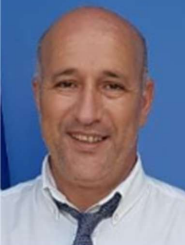
Idris Sadli is an Associate Professor (Maître de Conférences Hors Classe) at the University of French Guiana (IUT de Kourou), affiliated with the UMR Espace-Dev laboratory. He has been Director of the IUT de Kourou since 2015.
He obtained his PhD in Electrical Engineering in 2006 from INPL – University of Lorraine (GREEN laboratory, Nancy), with a thesis entitled "Impedance modeling of a PEM hydrogen fuel cell for power electronics applications". He also holds an Engineering degree in Electrotechnics from the University of Béjaïa (Algeria, 2000) and a DEA-PROTEE from the University of Lorraine (2002).
His research focuses on the modeling, optimization, and control of hybrid energy systems integrating renewable energies, electrochemical storage, and hydrogen. Initially centered on fuel cell and battery modeling, his work has shifted toward the energy transition of isolated power grids (particularly in French Guiana), with the development of intelligent energy management strategies (EMS, digital twins, artificial intelligence).
« Impedance Spectroscopy for Online Diagnosis of Fuel Cell Generators »
This tutorial provides an in-depth overview of impedance spectroscopy techniques applied to the online diagnosis of PEM fuel cell generators. It covers the fundamental principles of electrochemical impedance spectroscopy (EIS), its implementation in power electronics systems, and advanced methods for real-time monitoring and fault detection. The session will illustrate how impedance-based diagnostics can improve the reliability, durability, and performance of fuel cell systems in renewable energy applications.
We welcome sponsors and exhibitors to CISTEM 2026. Information regarding sponsorship packages and exhibition opportunities will be available shortly.
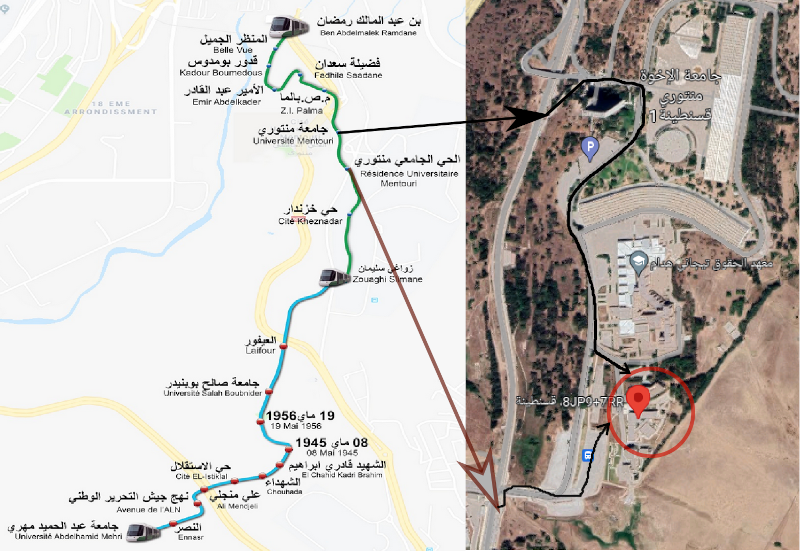
CISTEM 2026 will be hosted at the renowned Frères Mentouri Constantine 1 University, located in the historic city of Constantine, Algeria.
Tramway Line & Campus Location
There are plenty of hotels available in Constantine. We have selected a few of them for your convenience:
⭐⭐⭐⭐
Address: UV 01 Nouvelle ville Ali Mendjeli, Constantine 25000
Phone: 030 33 09 09 / 030 34 48 48 – 030 34 49 49
Email: hotelkhayem@yahoo.fr / commerciale@hotelkhayem.com
Facebook: Hôtel El Khayem
Conference Price:
⭐⭐⭐⭐
Address: UV7 Lot N°17,18 Nouvelle Ville - 25000 - Ali Mendjeli, Constantine – Algérie
Phone: +213 (0)31 75 00 00
Fax: +213 (0)31 75 00 33
Email: reservations@hotel-hocine.com
Web: www.hotel-hocine.com
Conference Price :
Tourist tax: 500 DA. Dinner buffet available: 3 800 DA.
⭐⭐⭐
Address: UV 07 Lot 15 Ali Mendjeli, Constantine 25000 - Algérie
Phone: +213 (0) 31 74 85 38 / +213 (0) 31 74 85 44–39
Fax: +213 (0) 31 74 85 40
Mobile: +213 (0) 5 59 38 71 85
Email: hotel.errafie@gmail.com
Prices :
Address: Route de l'Aéroport, Lotissement L'Eucalyptus N°77A, Constantine
Phone: 0698 650 652
Email: hoteleucalyptus25@gmail.com
Web: https://hoteleucalyptus.net/
Facebook: Eucalyptus Hotel
Prices:
Address: L'Eucalyptus, 78A cité, Constantine 25000
Phone: 0449 57 200 / 0559 17 7870 / 0449 57 245
Email: hotelbelkis@gmail.com
Facebook: Hôtel Belkis فندق بلقيس
Prices:
⭐⭐⭐⭐⭐
Address: Oued Rhumel Street, Cite des Arcades Romaines, Constantine
Phone: +213 31 73 10 73 / +213 31 73 10 00
Email: Boutout.Housna@marriott.com / djidjeh.amel@marriott.com
Web: marriott.com
⭐⭐⭐
Address: 1 Avenue Rahmani Achour, Constantine 25000
Phone: +213 31 91 13 77 / +213 31 91 16 86 / +213 31 91 19 38
Email: contact@hotelcirta.com
Web: www.hotel-cirta.com
⭐⭐⭐⭐
Address: 1 Square Hadj Ali, 25000 Constantine
Phone: +213 31 99 20 00
Fax: +213 31 87 19 93
Email: h6492@accor.com
Web: all.accor.com
⭐⭐⭐
Address: 59, Avenue Aouati Mostefa, Constantine 25000
Phone: +213 31 92 24 24
Fax: +213 31 92 35 35
Web: marriott.com
⭐⭐⭐
Address: Square Hadj Ali, 25000 Constantine
Phone: +213 31 99 20 00
Email: h6491@accor.com
Web: all.accor.com
Phone: 0775 09 96 97
Prices:
Address: UV 07 N° 78 - Entrée N.V Ali Mendjeli, Cité El Istikel, Constantine
Phone: 0555 84 48 63 / 030 27 60 83
Prices:
Rooms equipped with: TV, Air Conditioning, Fridge · Wi-Fi / Hot Water / Heating available.
Address: UV 07, Lot 55, Ali Mendjeli, El Khroub, Constantine, Algeria
Phone: 030 28 88 39 / 0673 99 73 32 / 0562 22 28 02
Email: Motel.firas@gmail.com
Prices:
Address: UV 07 Ali Mendjeli, Constantine
Phone: 039 05 62 80 / 039 05 60 39 / 0557 03 52 32
Email: dortoirlepic@gmail.com
Prices:
Breakfast included in the price.
For general inquiries about the conference, please contact the secretariat at: cistem2026-contact@lec-umc.org